
Language Services Associates Recognized as One of the Top Workplaces USA for 2023

4 min read

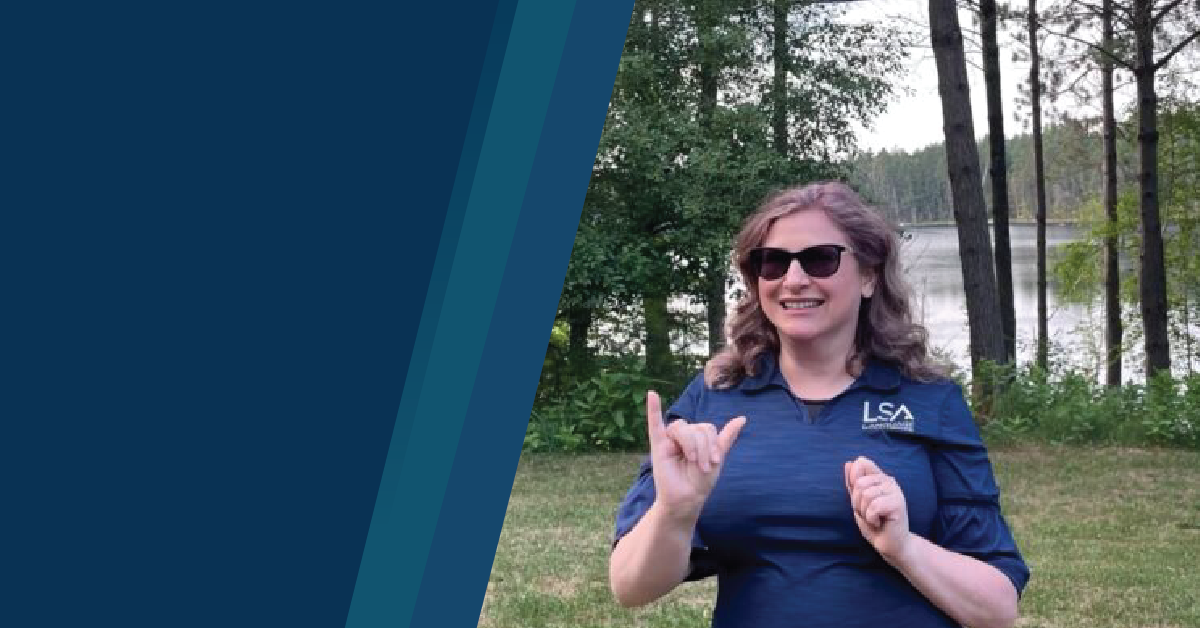
Language Services Associates (LSA) is thrilled to announce it has been named as one of the “Top Workplaces USA” and “in Philadelphia Inquirer Top Workplaces” for 2023. Top Workplaces USA celebrates organizations with 150 or more employees that have developed a positive workplace culture that stands out.  

LSA’s employees have been helping companies and governmental units break down barriers with their limited English proficient (LEP) customers and patients for over 30 years. With a dedicated team of passionate people, LSA helps facilitate meaningful communication through various customizable language solutions, including video, phone, in-person, and translations. By encouraging an inclusive working environment built on teamwork, openness, and collaboration, LSA continues to thrive in the competitive language access market. 

“LSA is a very special place. It is one of the best language companies in the world because of our amazing and passionate employees. Talent, dedication, intellect, and passion drive our team, and daily promote our culture where each person can shine. Our employees truly make a difference in the lives of people every day, and their enthusiasm shows,” said Scott Cooper, LSA’s President. “Combining our individual strengths, working together, and meeting our goals through teamwork and creativity, allows us to continue doing what we love most, help people” added John Lizana, LSA’s Director of Human Resources. 

Recently, LSA was also listed among DSMN8’s top ten “World’s Most Active Translation & Localization Professionals on Social -1k” list. Analyzing data from thousands of companies, DSMN8 ranked LSA among the highest when it came to employees sharing work-related content across social media platforms. 

Winners of the Top Workplaces USA list are chosen based solely on employee feedback gathered through a confidential employee engagement survey, conducted by Energage.  

Learn more about LSA and join our team today! 

Contact us at 800.305.9673 X55305 or fill out our contact form in seconds. 

About LSA 

Language Services Associates (LSA) offers a full suite of language interpretation solutions to help optimize the experience of limited English proficient customers and patients. Providing native language support improves the efficiency and productivity of staff, raises customer satisfaction levels, and builds loyalty. For thousands of clients worldwide, in more than 235 languages, LSA provides a competitive differentiator in the healthcare, government, financial and banking, insurance, entertainment, hospitality, and manufacturing industries. 

The Cost of High-Quality Interpretation: A Low Rate Doesn’t Mean Savings

5 min read

Highlights

The Importance of Investing in Language Services

Investing in a strategy to help your limited English proficient (LEP) patients or customers is an admirable goal, and being sure you’re getting the best deal is integral to offering high-quality services without emptying your pockets.

The Cost Consideration in Language Services

When considering a partnership with a language service provider, the first thing an organization weighs is price. The price of interpretation is a fair consideration to make. But when thinking about cost, it’s important to contemplate more than just the number laid out before you. While a low hourly or minute rate may seem appealing, it can cost you more than you bargained for if that interpreter is not carefully vetted, experienced, or qualified for your situation.

The Value of Qualified Interpreters

A qualified interpreter may have a higher per-minute rate than someone without a specialized skillset, but there are several reasons for this. Interpreting is more than just converting words from one language to another – it’s understanding meaning, context, cultural nuances, and having a background in a particular field, like healthcare for instance. Medical interpreters have a broad knowledge of medical terminology and treatments and are well-versed in healthcare regulations and ethical standards.

Ensuring Clear Communication

With a qualified medical interpreter, clear communication between a doctor and LEP patient is assured, which reduces costly readmissions and lengths of stay. These calls/sessions also tend to be shorter because a qualified medical interpreter doesn’t need as much time for clarification as an interpreter without a medical background (extra minutes add up even while an interpreter has a lower rate). In the long run, a more qualified interpreter saves you time and money even if their rate appears to be higher on the surface – and this applies to all sectors, from legal to finance.

Our Commitment at Language Services Associates (LSA)

At Language Services Associates (LSA), we hold our interpreters to a high standard, with a meticulous three-phase assessment process, and only one in every 40 candidates making it through our qualification procedure. Our interpreters are carefully vetted, industry-specialized, and frequently monitored to ensure that we are providing the highest quality service possible.

Get in Touch with Us

Contact our team at (800) 305-9673 ext. 55305 or fill out our contact form in seconds.

About LSA

Language Services Associates (LSA) offers a full suite of language interpretation solutions to help optimize the experience of limited English proficient customers and patients. Providing native language support improves the efficiency and productivity of staff, raises customer satisfaction levels, and builds loyalty. For thousands of clients worldwide, in nearly 300 languages, LSA provides a competitive differentiator in the healthcare, government, financial and banking, insurance, entertainment, hospitality, and manufacturing industries.

Six Reasons You Need to Partner with a Language Service Provider

13 min readIn any industry, the ability to communicate with your clients, patients, or customers is critical to your success, and allowing language barriers to get in the way can be costly. The world continues to become more globalized every day. Employing the technological solutions and expertise of a language service provider will give you the necessary tools for offering clear communication with your limited English proficient (LEP) patients, clients, or customers, while also ensuring you’re in compliance with state and federal laws. Expanding your reach outside of one language group can be the difference between making it or getting left behind – not only for yourself, but for 67.8 million people that speak a language other than English at home. Providing language access via a language service provider is the best way to support equal access for limited English-proficient communities at your school, business, hospital, or practice. 

Here are Six Reasons to Partner with a Language Service Provider Today: 

 1. Access to Underserved Markets 

If your organization is looking to expand, it’s important to note that most consumers/patients prefer communicating in their language. Whether you’re looking to increase your reach globally, within the United States, or in your community, incorporating a language access plan into your services is a great way to avoid alienating a substantial portion of the population, while breaking into an often overlooked yet growing market. Language and cultural competency are fundamental to the inclusion of diverse people, and taking shortcuts when it comes to communication and outreach can have consequences.  

Businesses looking to target new markets with products or services geared towards a specific community or language group may benefit from expert cultural consultation. Even companies with the best intentions risk costly setbacks due to missteps in cultural competency – there have been several instances where large companies have had to pull or discontinue products due to cultural inaccuracies.  

At Language Service Associates (LSA) our interpreters and translation teams are language and cultural experts that can help you avoid errors and ensure that your efforts to reach a wider audience are successful.  

2.  Complying with State and Federal Laws 

Depending on your industry, you may be required by language access laws to provide interpreters for your limited English proficient (LEP) clients/patients. These laws include Section 1557 of the Affordable Care Act (ACA), the Americans with Disabilities Act (ADA), Executive Order 13166, and Title VI of the Civil Rights Act of 1964. 
Primarily, businesses and organizations that receive federal funding typically need to abide by these laws – schools, healthcare facilities, government offices, etc. But states may have their own laws that can also apply to several other sectors. Partnering with a trusted language provider offers you consultative experts that complement your internal teams with expertise in language services. This assures you receive the appropriate solutions necessary for complying with mandatory state and federal laws, that fit seamlessly into your routine and budget. LSA offers guidance and support to ensure that you fully adhere to mandatory regulations, and have the tools necessary to support your LEP population. 
3.  Improving Customer or Patient Services 

Communication is key in business transactions or providing care for patients or customers that require native language support. The easier it is to communicate, the better the experience will be for everyone – this is especially true in the healthcare sector where jargon and complex terminology can be difficult to understand in any language. Miscommunication can lead to mistrust, loss of clients, misunderstood diagnosis or treatment, and numerous issues that can negatively impact your business or practice. A language provider offers interpreters trained and/or certified in different sectors that keenly understand industry terminology and standards. These interpreters help bridge a gap between staff/employees and their LEP clients/patients that often gets in the way of providing first-rate service or care. LSA’s interpreters are selected only after enduring a rigorous qualification process with only one in 40 meeting our standards. These interpreters are well-versed and highly experienced in their specialized sector and can be the difference you need. 

 4. Building Brand Trust 

In various cultures and languages, messages can be interpreted in many ways. While in English, your business may be sending a clear message to your customers, that same message may have an entirely different meaning in Arabic or Spanish. Partnering with a trusted language service provider will give you the tools to communicate clearly with LEP populations, breaking down language and cultural barriers. This will protect your brand’s reputation and build trust among consumers who seek out organizations that make an effort to communicate with them. Building consumer trust begins with clear communication in a variety of languages. Language Services Associates has a team of highly experienced translators and interpreters with expertise in the business sector to facilitate clear, culturally appropriate communication between your company and diverse clientele.  

5. Saving Money 

In most industries, encountering people who speak another language is fairly common. How an organization addresses their diverse clientele can be the difference between not only offering the right products or care, but also how much money is lost or spent. A bilingual employee may help with a customer or two, but remember that a bilingual employee doesn’t have the same range of knowledge and experience that a qualified interpreter brings to the table. Asking a bilingual employee to serve as an interpreter also puts pressure on them while taking time away from their actual job. A professional interpreter’s experience goes beyond just understanding language – they know cultural nuances, body language, and can convey meaning faster than your average person (especially when a word doesn’t have an equivalent in another language). Legally, using an employee in place of an interpreter can have consequences. In medical settings, if an untrained bilingual employee was to misinterpret a word or meaning, this could result in errors of diagnoses, treatment, and aftercare. This might lead to patients being readmitted, or a lawsuit if serious consequences were to transpire for the patient. 

You can hire a freelance interpreter, which may seem like a cost-effective solution in the short-term, but they tend to set their own schedules and charge a high price – and since they set their own itinerary, the wait to bring them into your facility can be costing you money in the interim. Language providers carefully vet their interpreters and offer industry-specialized agents that have undergone rigorous training and monitoring.  A language provider offers access to over-the-phone interpreters (OPIs) on demand in hundreds of languages ready to take your call. Or, if it’s more appropriate, video and in-person solutions are available as well. LSA improves the client experience and agent metrics when a client interaction requires an interpreter.  

6. Access to Hundreds of Languages with Sector-Specific Expertise  

Through various customizable solutions, language service providers offer a direct line to hundreds of languages and dialects. Interpreters specialize in individual fields (medical, finance & banking, contact centers, legal, etc.) with a clear understanding of the terminology used, and access to tools and study guides to keep their skills sharp and up to date. From American Sign Language to Spanish to rare dialects, language providers have the tools to prevent communication oversights that can harm your business. LSA’s interpreters have access to reference material and study guides for continuous training. They’re monitored and tested to maintain the highest quality standards. 

Learn more about LSA’s customizable solutions today! 

Contact our team at 800.305.9673 X55305 or fill out our contact form in seconds. 

Why a Bilingual Family Member or Friend is Never a Good Substitute for a Medical Interpreter

7 min readThe notion that a bilingual family member or friend can act as an interpreter has repeatedly proven to be a repeated problem, especially in hospital settings where sensitive information needs to be passed between a doctor and a patient. A family member or friend should never carry the burden of telling someone they love that they have a life-threatening condition or diagnosis – nor are they trained to do so.

In the US, 67.8 million people speak a language other than English at home, and that number is expected to grow.  Partnering with a trusted language service provider (LSP) is the best way to ensure that limited English proficient (LEP) patients, customers, clients, etc., receive the same treatment and access as their English-speaking counterparts.

Medical Interpreters Do More Than Interpret Spoken Language

A qualified medical interpreter does more than interpret words. They read the room, understand the meaning of what’s being said, recognize body language, and are knowledgeable of cultural nuances to ensure that nothing is lost in translation and that cultural customs aren’t barriers to care. While a family member may be hesitant to use certain language in front of a relative and work around it with different wording (especially for intimate questions), an interpreter has the training to remove themselves from the situation, being sure that everything is communicated accurately and professionally. It’s also extremely dangerous and sometimes fatal for patients not to have a professional interpreter to communicate with their healthcare provider. Medical interpreters are  fluent in the Health Insurance Portability and Accountability Act (HIPAA) and the importance of confidentiality, whereas a bilingual individual acting as an interpreter wouldn’t necessarily have the training to understand the significance of privacy regulations.

The Dangers of Not Having a Qualified Medical Interpreter

In one instance, according to NPR, a nine-year-old Vietnamese child was taken to the emergency room by her parents, suffering from symptoms of an apparent stomach flu. Her parents didn’t speak any English and the hospital did not have an interpreter to facilitate communication. Hospital staff instead spoke English to the young girl and her 16-year-old brother, sending the family home with written instructions (in English) after prescribing her a medication not typically meant for children. The instructions, unbeknownst to the parents, said for the girl to return to the hospital immediately if she experienced specified side effects. She had an adverse reaction to the medicine and died of a heart attack. The doctor and hospital paid $200,000 in damages to the unfortunate family who lost their daughter over a communication discrepancy that could have easily been avoided.

Opportunity to Help Your LEP Patients

Partnering with Language Services Associates ensures that your medical facility can connect patients and doctors to qualified medical interpreters in seconds. Interpreters are familiar with concepts and terminology from various medical specialties and are well-versed in healthcare regulations and ethical standards. Whether it’s video, over-the-phone, or in-person interpretation, partnering with LSA provides  access to over 235 languages within seconds, from a network of over 6000 interpreters who have undergone a rigorous six-step assessment process to be approved to work on our platform. Take advantage of our customizable solutions and connect with a medical interpreter who has the experience and knowledge to provide accurate communication. It saves lives.

If you have bilingual staff, our Language Assessments & Testing program can gauge the language proficiency and interpreting ability of your dual-role bilingual employees according to industry standards. This ensures compliance, reduces risk, and allows your facility to offer the highest quality care.

Learn more about LSA’s interpretation and translation solutions for healthcare today!

Contact our team at 800.305.9673 X55305 or fill out our contact form in seconds.

About LSA

Language Services Associates (LSA) offers a full suite of language interpretation solutions to help optimize the experience of limited English proficient customers and patients. Providing native language support improves the efficiency and productivity of staff, raises customer satisfaction levels, and builds loyalty. For more than 2,000 clients worldwide, in more than 230 languages, LSA provides a competitive differentiator in the healthcare, government, financial and banking, insurance, entertainment, hospitality, and manufacturing industries.

Breathe New Life into Language for This Year’s International Mother Language Day

8 min readThere are over 7,000 languages spoken throughout the world, with 2,400 in danger of becoming extinct. Many of these are native languages spoken by Indigenous people around the globe, that have ties to unique histories and cultures – histories and cultures on the precipice of dying out with the languages themselves. Without recognition and qualified language support, the disappearance of these native languages can put people at risk. 

International Mother Language Day is observed annually on February 21st to raise awareness and celebrate the importance of linguistic and cultural diversity. The United Nations Educational, Scientific and Cultural Organization (UNESCO) approved the holiday in November 1999, and the UN officially recognized it in 2002.  

The day serves to highlight the importance of multiculturalism, and to support the preservation of languages spoken by people throughout the world. Protecting language and culture effectively safeguards against inequality, discrimination, and alienation of populations, advances inclusion, and allow various cultures and worldviews to coexist.  

Not Having a Reliable Language Provider Can Have Dire Consequences for Indigenous Peoples

In September 2022, the west coast of Alaska was devastated by Typhoon Merbok, forcing the Chevak Native Village and the City of Chevak to declare a state of emergency. The Federal Emergency Management Agency (FEMA) hired a translation company to convert information about applying for disaster recovery assistance into two Alaska Native languages – Yugtun and Iñupiaq. 

According to Alaska Public Media, numerous sources said the translations received were not accurate, leaving approximately 13,000 people without the translated documents necessary for getting help. 

Linguist Gary Holton, who spent 20 years documenting Alaska Native languages at the University of Alaska Fairbanks’ Alaska Native Language Center, said that whoever translated the documents into Yup’ik lifted phrases from the Rubtsova texts – a collection of language and folklore from Far East Russia published in the Soviet Union in the 1940s. 

Holton pointed out that the translations were nonsensical, noting that where FEMA’s news release read “State News Desk,” the translated version read, “when she said so, the dog ran farther off from the curtain.” 

Tara Sweeney, the former Assistant Secretary of Indian Affairs, told Alaska Public Media, “There’s a lot of that historical trauma of being beaten in schools because they were speaking their Indigenous languages, which is why there’s a generation of us in Alaska that struggle with fluency.” 

FEMA took responsibility for the incident, fired the agency that did the translations, and immediately had them corrected. Fortunately, no one was denied aid. 

Not a single person should be denied help during an emergency because of the language they speak. Understanding the significance of language access during an emergency is critical, and speaking a native language is not a reason to receive lesser services or no service at all. Partnering with a reliable language service provider can be a game changer for people who speak languages of lesser diffusion (like Yugtun and Iñupiaq, these are native languages spoken by a small population in a geographic area) and the organizations that aim to help them. 

Education and a Reliable Language Service Provider Help Keep Languages Alive 

On their website, UNESCO explains, “Globally, 40 percent of the population does not have access to an education in a language they speak or understand. Nevertheless, progress is being made in multilingual education with growing understanding of its importance, particularly in early schooling, and more commitment to its development in public life.” 

International Mother Language Day serves to recognize and revive languages that are vanishing or on the verge of dying out. By educating people about the importance of language and its ties to rich cultures and histories, it encourages people to continue learning these languages, and can prevent awful mishaps like what occurred in Alaska from happening again. 

Language Services Associates (LSA) provides native language support with a team of highly qualified, carefully vetted interpreters and translators. We understand the importance of accurate, culturally appropriate language conversion, and offer customizable services to ensure that your organization can communicate with LEP populations clearly and effectively. 

Learn more about Language Services Associates’ interpretation and translation solutions today! 

Contact our team at 800.305.9673 X55305 or fill out our contact form in seconds.  

About LSA   

Language Services Associates (LSA) offers a full suite of language interpretation solutions to help optimize the experience of limited English proficient customers and patients. Providing native language support improves the efficiency and productivity of staff, raises customer satisfaction levels, and builds loyalty. For more than 2,000 clients worldwide, in more than 230 languages, LSA provides a competitive differentiator in the healthcare, government, financial and banking, insurance, entertainment, hospitality, and manufacturing industries.  

Language Services Associates, Inc. Renews Partnership with The Philadelphia Union

3 min readPRESS RELEASE

FOR IMMEDIATE RELEASE:

Media Contact:
[email protected]

HORSHAM, PA. (February 6, 2023) –Language Services Associates, Inc. (LSA) today announced that, after a successful first year, it officially renewed its partnership with The Philadelphia Union for the 2023 Season.

The focus of the partnership will continue to be on promoting language access and optimizing the Fan Experience for the Limited English Proficient Union Community.

“LSA’s 2022 partnership with The Philadelphia Union proved to be the perfect pairing of sporting and language excellence,” said Scott Cooper, President of LSA. “We’re ready to support the Union as their Official Language Services provider and multilingual MVP for 2023.”

“We initiated our partnership with LSA last season in order to allow the Union to reach new audiences, and we achieved exactly that,” said Philadelphia Union Chief Revenue Officer, Charlie Slonaker. “We’ve been able to expand our communication efforts within the team, as well as with our fanbase. We’re excited to be able to continue this relationship as we look to further connect with fans in effective, meaningful ways.”

The partnership will expand on a variety of creative pairings including the Player Interview Series, where players share their favorite Philadelphia Union memories and stories in their native language, as well as several new fan engagement initiatives, rooted in language access. The Union will continue supporting these efforts by utilizing LSA’s vast network of highly skilled linguists in over 230 languages to increase communication to their vast Limited English Proficient fanbase.

###

Language Services Associates Presenting at 2023 Delta Purchasing Alliance Member Summit

3 min readOn Thursday January 19th, 2023, Language Services Associates’ (LSA) Jerry Lotierzo, Strategic Sales Manager – GPOs, is heading to the yearly Delta Purchasing Alliance (DPA) Member Summit in Las Vegas, Nevada. Jerry will be representing LSA among a select 25 members that will be in attendance from some of the nation’s largest Federally Qualified health Centers where Interpreting services are required. Working alongside CEOs, CFOs, other DPA members, and health center finance, operations, and purchasing staff, Jerry will be presenting how LSA can partner with DPA members to provide solutions to make their community health centers more efficient through language access. As the only language provider presenting at the summit, we are honored to have Jerry share our story, history, philosophy, and our customizable solutions to meet every client’s needs.

Learn more about how LSA’s customizable solutions can make healthcare more equitable at your facility.

Contact:  Jerry Lotierzo at 800.305.9673 X55335 or [email protected]

About LSA

Language Services Associates (LSA) offers a full suite of language interpretation solutions to help optimize the experience of limited English proficient customers and patients. Providing native language support improves the efficiency and productivity of staff, raises customer satisfaction levels, and builds loyalty. For more than 2,000 clients worldwide, in more than 230 languages, LSA provides a competitive differentiator in the healthcare, government, financial and banking, insurance, entertainment, hospitality, and manufacturing industries.

Interpretation vs. Translation: Understanding the Key Differences

7 min readInterpretation and translation both promote breaking down language barriers, facilitating communication, and bringing cultures together. And while most people use the terms “interpreter” and “translator” interchangeably, the two disciplines require a different skill set and are rarely conducted by the same people. Outside of the language service industry, the terminology can be confusing. Understanding the intricacies of each unique medium will make it easier for organizations looking to partner with a language provider to acquire the solutions they need. 

The first major distinction between interpretation and translation is that interpretation is spoken, and translation is written. On the surface, this is the defining characteristic that sets each apart from the other. But let’s take a deeper dive into three key differences. 

1. Translation is Performed Over Time, Interpretation is Immediate

Interpretation is executed in real-time either over the phone, in person, or via video. During conversation, an interpreter needs to listen for, not only the words being spoken, but also the nuances, meanings, and tones being delivered. In many languages there are words that don’t always have an exact equivalent in another language. In these cases, an interpreter will have to think quick on their feet to render the meaning of what is being said and keep the conversation moving without losing accuracy. 

Since translation renders the meaning of the written word from one language to another, it doesn’t entail the same immediacy as live interpretation. Translation occurs subsequent to the development of the source and affords the translation team time to utilize terminology resources, parallel texts, specialized technology, and other support tools to ensure the text is translated exactly as the author intended. 

2. Fluency and Direction 

Interpreters need to be fluent in both languages they work with. During quick back-and-forth exchanges the ability to instantly understand what is being said and relay that information accurately is critical to the task at hand. They need to work well under pressure and have superb communication skills. 

While translators need native fluency in the source language as well as the target language, they only work into their native language. They must have remarkable comprehension skills and an almost innate ability to transfer from the source language to the target language. They have the option of consulting terminology resources, specialized subject-area reference material, and making use of the most current technology to support their work.  

3. Collaboration 

While both interpretation and translation require teamwork, the people they work with are quite different. Interpreters work directly with clients and their limited English proficient customers or patients in realtime. They depend on their memory and fluency in the two languages to quickly work with each speaker in the absence of any external tools or resources for support. 

In translation, a project can go through several stages and edits, and involve a team of translators, editors, proofreaders, and project managers all working together to assure that the intended meaning of the original material is kept intact. Translators rely on their expert reading comprehension skills, and their ability to accurately render written material into the target language. 

Interpretation and translation are closely related in that they bring cultures together and remove language barriers; however, the skill sets required are ultimately quite different. Understanding these key differences can make it easier to navigate the solutions offered by language service providers. 

Learn more about LSA’s interpretation and translation services today! 

Contact our team at 800.305.9673 X55305 or fill out our contact form in seconds.

About LSA 

Language Services Associates (LSA) offers a full suite of language interpretation solutions to help optimize the experience of limited English proficient customers and patients. Providing native language support improves the efficiency and productivity of staff, raises customer satisfaction levels, and builds loyalty. For more than 2,000 clients worldwide, in more than 230 languages, LSA provides a competitive differentiator in the healthcare, government, financial and banking, insurance, entertainment, hospitality, and manufacturing industries.

Language Services Associates Named One of the World’s Most Active Translation & Localization Professionals on Social Media

4 min readIf a company is only as good as its employees, then Language Services Associates (LSA) is doing something right. DSMN8 – the premier Employee Influencer Platform – named LSA among its top ten in their “World’s Most Active Translation & Localization Professionals on Social -1k” list. 

Collecting data from thousands of companies, LSA’s employees rank among the highest when it comes to sharing LSA-related content across numerous social media platforms. Representing the language service provider’s talent, culture, inclusivity, and brand, LSA’s staff share in the “We Help People” philosophy that energizes the company and allows it to continue assisting organizations and their limited English proficient customers communicate. 

LSA’s employees regularly increase company awareness, boosting website traffic, and generating new business for the organization, helping it grow, and showcasing the pride taken in their everyday work and goals. As influencers, LSA’s employees display how much LSA effectively engages with its staff, and includes them in key decisions, while increasing its reach and allowing everyone to have a voice. 

For over 30 years LSA has been the leading language provider in the industry, offering flexible solutions for its clientele, keeping it at the forefront of translation and interpretation services. By utilizing the forward-thinking and creativity of its staff, LSA continues to thrive in a highly competitive ever-changing field. 

For more information and to see the complete “World’s Most Active Employees on Social” list, please click here. 


About LSA 

Language Services Associates (LSA) offers a full suite of language interpretation solutions to help optimize the experience of limited English proficient customers and patients. Providing native language support improves the efficiency and productivity of staff, raises customer satisfaction levels, and builds loyalty. For more than 2,000 clients worldwide, in more than 230 languages, LSA provides a competitive differentiator in the healthcare, government, financial, insurance, banking, entertainment, hospitality and manufacturing industries.

Language Services Associates Featured in CIO Applications, President Scott Cooper Talks Flexible Solutions and the LSA Difference 

4 min readLanguage Services Associates (LSA) was recently named one of the Top Ten Companies Providing Insurance Technology Solutions in 2022 by leading technology magazine, CIO Applications. CIO Applications features companies that distinguish themselves by providing unique solutions to their customers. LSA’s President, Scott Cooper, sat down with CIO Applications to elaborate on why LSA is not only a leader in insurance, but in every sector language touches.

Mr. Cooper makes note of LSA’s three-pillar approach – finding the best interpreters, leveraging technology to connect clients on their individual platform of choice in seconds, and providing the best customer service experience in the market.

Flexibility and technology tailored to each customer’s requirements are among the top reasons LSA excels when it comes to connecting clients with interpreters in record time. Mr. Cooper talks about the hurdles clients were confronted with when COVID changed the landscape of customer service in industries like healthcare, where compliance with HIPAA laws and other privacy regulations are a top priority. Giving customers the option to transition from their traditional in-person interpretation standard to telephone and video remote interpretation seamlessly, while not compromising value and privacy, was how LSA stayed ahead of the curve.

By implementing services that allow companies to integrate LSA’s technology into their own, LSA gives clients the solutions to continue doing business as usual. With minimal training, clients can use LSA’s services on any platform they are comfortable with, and virtually on any device.

In a specialized sector like insurance, it’s easy to get lost in translation. Even for English speakers some of the jargon can be confusing, leaving customers with more questions than answers. LSA provides highly qualified interpreters who specialize in Insurance, with an understanding of the vocabulary used, industry-specific terms, and the ability to explain difficult concepts to customers in their own language.

For the full article and interview, and to learn more about LSA’s communication expertise, please click here.

About LSA 

Language Services Associates (LSA) offers a full suite of language interpretation solutions to help optimize the experience of limited English proficient customers and patients. Providing native language support improves the efficiency and productivity of staff, raises customer satisfaction levels, and builds loyalty. For more than 2,000 clients worldwide, in more than 230 languages, LSA provides a competitive differentiator in the healthcare, government, insurance, finance, banking, entertainment, hospitality and manufacturing industries.

Language Services Associates, Inc. announce partnership with The Philadelphia Union

4 min read

FOR IMMEDIATE RELEASE:

Media Contact:
Lis Pontoski
Marketing

800.305.9673 EXT. 55139

CHESTER, PA. (March 4, 2022) – Today, the Philadelphia Union and Language Services Associates, Inc. (LSA) announce their new partnership. LSA is a global leader in business-to-business interpretation, translation, and American Sign Language services. For over 30 years LSA has been helping its customers grow by communicating in hundreds of languages with their customers and employees. Currently supporting over 230 languages, LSA offers over 12,000 of the highest-quality interpreters and translators through state-of-the-art and secure phone, video, and scheduling technology. Its customers include healthcare, call centers, insurance, financial institutions, hospitality/gaming, retail, and education.

In the current partnership, LSA will help the Philadelphia Union continue its incredible success in expanding the beautiful game into an increasingly diverse and international fanbase. Specifics include expanded language players and coaches press conferences, media kits in languages other than English, a content series with international player interviews on Philadelphia Union social media channels, community outreach and fan engagement.

“Partnering with LSA allows the Philadelphia Union to reach new audiences,” said Philadelphia Union Chief Revenue Officer, Charlie Slonaker. “This innovative partnership will open doors for our international players to connect with new and existing fanbases in a deeper, more meaningful way.”

“The fit between LSA and the Philadelphia Union is fantastic,” said LSA’s President Scott Cooper. “Both organizations share common passions for excellence, bringing people together, and teamwork. We are thrilled to partner with the Philadelphia Union to help enrich the fan and player experience here and around the globe by removing language barriers.”

Founded in 1991, LSA remains a 100% woman and minority-owned business, based in the Philadelphia suburb of Horsham, Pennsylvania.

LSA LED Field Sign at Subaru Park Stadium, 03/05/2022

***

How to Address the Limited English Speaking and Deaf Community During the COVID-19 Crisis

7 min readThe COVID-19 outbreak is causing hospitals and physicians across the country to increasingly utilize telehealth and video encounters.  At the same time, government regulations are rapidly changing to allow for more telehealth to address the crisis. At the center of these developments is a dire need to reduce the amount of direct human contact in clinical settings.  The risk of exposure to the virus in this outbreak is high. Health experts indicate outbreaks may become more common.   In addition to the many known challenges COVID-19 is creating, limited English speaking and Deaf patients face additional challenges.  Amid this crisis, heart-breaking reports of some hospitals having difficulties accessing interpreters are beginning to surface.  Healthcare providers can solve these problems IF the right solutions are in place.

New Ways of Delivering Interpreters to Extend Care Beyond Walls

The growing importance of mobile healthcare underscores the critical need for interpreters-on-demand.

At every turn, healthcare providers and government officials are urging the reduction of human contact during clinical settings to alleviate the spread of the disease.  Communicating with the limited English proficient population (LEP) and the hard of hearing only gets more difficult with these new guidelines and procedures.  An added problem is that most health systems utilize their own communications and privacy protection platforms.

Industry experts have responded by developing a range of solutions to keep communications safe and reliable.  Language Service Associates (LSA) has solutions and options available now for all levels of patient care.

A Range of Options

No one solution will work perfectly for all healthcare providers.  The solution must match existing needs, ability to deploy, training time, clinical settings and budgets.  Each option will bring with it “pluses and minuses” that each provider must evaluate.

  • Top-Line Option – Full Integration with Telehealth Platform

The best option remains a fully integrated telehealth solution that integrates with the patient’s Electronic Health Records (EHR).  The new ViTel Net and Language Services Associates (LSA) platform integration enables clinicians to immediately add an interpreter within the existing telehealth workflow with just three clicks. This streaming solution works across multiple devices, regardless of a physician or patient location, and without additional equipment for the healthcare organization. By embedding the interpreter solution directly into a telehealth encounter, your organization vastly improves clinician workflows, reduces the chance for medical errors and readmissions for limited English proficient (LEP) and hearing-impaired patients. It’s a cost-saving, affordable, HIPAA secure, and sustainable option.

  • LSA’s IRIS Solution

Where full telehealth integration is not possible, another option is the use of LSA’s IRIS (Instant Remote Interpretation Solution) platform application. to enable a patient and doctor to seamlessly interact directly with an interpreter on an app. It is an application that is easily downloadable on mobile, computer or tablet. It’s also encrypted, secure and meets NAD standards.

  • LSA’s Interpreter to Your PlatformConnect

Many healthcare providers are already using some form of video telehealth platform (eCW, Teledoc, MDLive, etc.) or other conferencing solutions (Zoom, Teams, etc.).  Changes in regulations now allow for the introduction of an interpreter into your existing platform.  LSA’s Interpreter to Your Platform Connect option is a solution aimed at immediately fitting into an existing platform.  It is a cost-effective solution, without significant IT development, for healthcare providers that must get up and running quickly.  The challenge here is that patient privacy is still dependent on a third-party provider outside the control of the healthcare provider.

There are also several other solutions including video conference third party calls and virtual face-to-face, each with pros, cons and important security considerations. As our healthcare delivery model rapidly changes, healthcare organizations need flexible options for accessing interpreters. Language Services Associates has the solutions for your organization.

To learn more, click here to schedule a demonstration and consultation today.