LSA Celebrates National Customer Service Week

2 min read

The LSA Client Services Team

In the spirit of National Customer Service Week, we would like to take this opportunity to say thank you for your commitment to helping people communicate.   Through our language solutions, you make a positive impact on people’s lives around the world every day.

What we do matters. Together, we help millions of non-English speakers overcome obstacles and flourish in a global environment. We come to work every day knowing we are making a real difference in society, and we couldn’t do it without you, our clients and linguists.  It is this passion for helping others that continues to drive our culture of service excellence. Learn more more about our Customer Service Promise here.

About National Customer Service Week

National Customer Service Week was created by the International Customer Service Association (ICSA) in 1984 in order to further their mission to recognize and reward individuals who provide service to customers as the primary function of their job.  In 1992, President George Herbert Walker Bush signed a presidential proclamation establishing the first week of October as National Customer Service week.

How the Nuremberg Trials Changed Interpretation Forever

3 min read

Translators & Interpreters for the Nuremberg Trials – Image via Flickr

As the world becomes more and more interconnected globally, the sight of an interpreter rendering a simultaneous interpretation has become common place. However, it hasn’t always been that way. Unbeknownst to most of us, the practice of interpreters rendering this simultaneous interpretation did not exist before 1945.

The origins of simultaneous interpretation can be traced back to some of the most famous of trials in all of history: the Nuremberg Trials. Before the end of World War II, all interpretation was done consecutively, meaning one speaker would speak at a time and interpretation would follow. The Nuremberg Trails and the need for “fair and expeditious” trials changed all of this.

With the trials themselves being a massive undertaking and the need for the dialogue to be interpreted in the four languages of the nations involved (German, English, French and Russian), there had to be an efficient solution created to expedite the process of rendering all of the communication accurately and completely. One man had the answer, and his name was Col. Leon Dostert. He was the first to believe in and carry out the now commonplace method of simultaneous interpretation.

To find out more about how the Nuremberg Trials sparked the creation of simultaneous interpretation and how Dostert helped to have the practice adopted worldwide, please read the following article.

Saving Pawpaw: A Once Dominant French Southern Missouri Dialect, Now Only a Whisper

3 min read

Photo via Flickr

A once prominent French Dialect spoken in the upper Mississippi River Valley of the Midwestern United States (specifically in eastern Missouri), is now nearly extinct.  Named Missouri French or”pawpaw” French after a local fruit-bearing tree, this unique melding of the Canadian French accent with some Louisiana “Creole” French vocabulary was first established when the French began settling the area in the early 18th century. French workers from the then French Canadian and Louisiana territories flowed into this remote area of the Ozarks to work local lead mines, mixing and blending their two varieties of French to create a very interesting language bridge.

Alas, time has not been kind to pawpaw French.  With more British influence steadily increasing in the area after the French and Indian war, French began to lose ground as the dominant language of the region. This led to the eventual stigmatization of the language: In the early 20th century, children were punished for speaking pawpaw French in the classroom and parents started to think twice about passing it on to the next generation.

In 1980 there were fewer than 1000 speakers of pawpaw French left in the world, and as of today a local news story reported there are fewer than 30. However, the steady decline hasn’t stopped the curiosity of linguists around the country from studying and finding an appreciation for this strange and beautiful version of French, which may prolong the language’s life for a little longer.

Although pawpaw French might not be around forever, for now we can at least enjoy this link to the past and celebrate the history and culture surrounding it.  Feel free to post your comments below or to learn more information please read the full article here.

LSA Recaps Call Center Week

10 min read

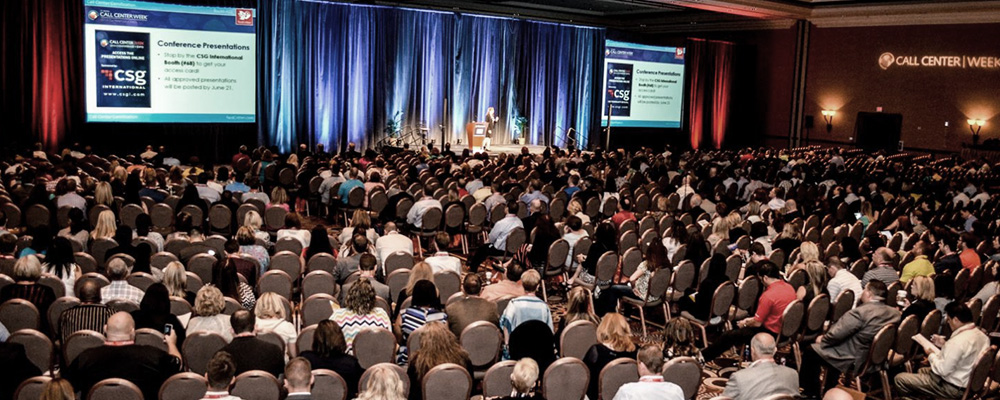
image via callcenterweek

Anyone involved in Sales and Marketing has most likely had the opportunity to showcase your company at a conference. The objective being to meet both new and existing customers, with the hope that interactions amidst the conference activities will result in increased business. While most vendors don’t have either the ability or inclination to venture too far from the exhibit floor, at LSA we try our best to attend sessions and workshops that will give us tidbits of valuable information to pass along to our customers and fellow employees.

At the 15th Annual Call Center Week conference in Las Vegas a couple weeks ago, close to 2000 people came together to discuss ways to improve call center operations, with the predominate theme being how a great customer experience can drive a business forward. We were fortunate to hear from customer service executives from Zappos, Microsoft, Amazon, HP, Time Warner, Expedia, Google and many others…some of whom are our customers like Jerry Nadel from Cirque du Soleil, Sonya Hansen from inContact, Graham Tutton from Comcast, Terry Byrnes from Caesars Entertainment and Adriana Torres from Visa.

As contact centers look to adjust to the increasing demands of customers and the various ways in which they choose to communicate, including language and culture challenges, the need for a modernized approach has never been greater. Many of the sessions focused on technology, particularly cloud solutions, unified service desks, knowledge management and the rise in multichannel communication. Discussions took place and ideas were shared with regard to……how does a company respond? What is the potential impact on productivity and customer satisfaction? How do you balance all this with cost and profit expectations? However, the overarching theme, regardless of the session topic or the company was I think best coined by Kana (a company providing customer service solutions), “Customer Experience is the New Black”. There is no doubt that we’ve not only entered but are immersed in what Forrester calls “the age of the customer” a time when focus on the customer matters more than any other strategic imperative. Research shows that 92% of companies have customer experience (CX) as a top strategic priority and 40% of companies believe CX can differentiate their products and services from the competition. Great CX leads to loyalty, recommendations and a 23% increase in wallet share. We also know that 86% of customers are willing to pay for a better CX. Customer experience is foundational for every business. Research has shown that the stock of CX leaders hugely outperforms the stock of companies that are considered CX laggards (22.5% vs. -46.3% according to Forrester).

What makes for an outstanding and consistent global customer experience? As said best by Visa, “The experience isn’t just what happens on the phones – it is multi-channel, multi-lingual, multi-generational.” A significant part of this is the concept of Omnichannel integration. It’s the idea of having a great continuous experience anyplace, anytime. It’s about knowing your customer and how to work with them so they have the same quality of outcomes on all channels (web, chat, email, text, social). It’s about seamless channel transition no matter when, where or how they are engaging us. It’s about giving our customers the right information at the right time…automatically. Encompassed within this environment we should also be focusing on:

  • Minimizing customer effort with relevant, personalized service interactions across all channels
  • Empowering our service professionals with the knowledge and tools they need to deliver great service at their fingertips…preferably from a single application
  • Decreasing service response times while increasing first contact resolution
  • Increasing customer self-service success
  • Listening to, analyzing interaction and engaging on social channels and using social data to trigger workflows to handle situations

There seemed to be agreement amongst the conference attendees about the major trends that are re-shaping the customer experience. There was much discussion about the ways in which social media is evolving and changing the CX with new channels, speeds and shifting rules of engagement. Along with the growth in the usage of mobile, tablet devices and other technology there was talk about the impact of new digital channels like video. Pegasus (a company delivering customer engagement solutions) said that predictive analytics was the way to achieve a “WIN-WIN, a happy customer and an efficient agent”. And Fonolo (a company providing this cloud based service) discussed the benefits of using call backs, suggesting that they do more than eliminate hold times. Surveys say that 75% of consumers find the option of having a call back highly appealing. They can not only smooth out call center spikes but companies using call backs have found that after adding this option they had a 32% reduction in abandoned calls, 35% lower telecom costs and a 13% reduction in handle time. And of course, the call backs can and should take place across all channels.

We all know that we truly live in a world without borders or boundaries and that people in general expect excellence in service. The most successful companies that had a voice at this year’s Call Center Week Conference believe that that they are better positioned to provide a fantastic customer experience that directly translates into a profitable business by focusing specifically on people’s happiness, to include not only their customers but also their employees. In upcoming editions of the LSA Digest, we will discuss how many companies, not only Zappos, are building a culture based on this principle. And we’ll explore the ways in which call centers are leveraging technology and language service providers to engage their multi-lingual customers across all service channels.

Please see below for a few photos from LSA at the event.

LSA Sponsors Philadelphia’s Welcoming Cities Week

2 min read

LSA is honored to be an official sponsor of Philadelphia’s Welcoming Cities Week, an initiative from the Mayor’s Office of Immigrant and Multicultural Affairs (MOIMA) that seeks to promote a more welcoming city for immigrants and residents of diverse backgrounds.

As part of our sponsorship, LSA’s Director of Client Services, Sarah Branson, will be participating in a panel discussion on working with Limited English Proficient and multicultural groups. This discussion is designed to help city agencies, service providers and other organizations learn how to engage with communities where language and culture might create a unique set of challenges. Sarah will be joined by John Farrel, Director of PhillyRising, and Amanda Bergson-Shilcock, Director of Outreach and Program Evaluation at the Welcoming Center for New Pennsylvanians. Stay tuned for additional updates regarding this panel discussion!

For more information on Welcoming Cities Week, and for the complete schedule of events, please visit https://www.xculturalpassportphl.com/index.html.


LSA Employees Share Their Passions

5 min read

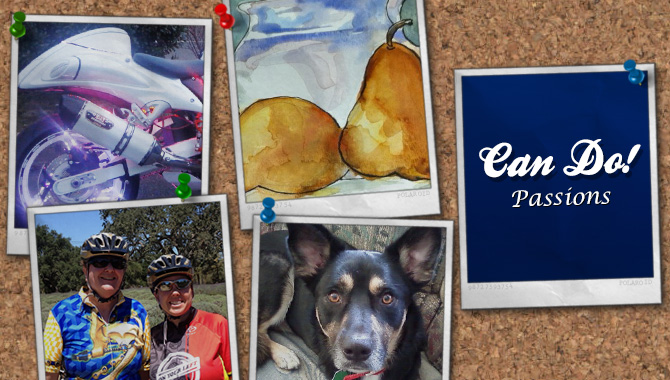
In honor of our featured Can Do! Ingredient (Passion), we asked employees to tell us what they are most passionate about. Here are some of the responses we received:

Alice Udovich, INTERPRETALK® Interpreting by Telephone Coordinator

Alice is passionate about painting! “Although I am artistic, I really had not painted since high school,” said Alice. “I recently purchased some watercolors and sketch books and started painting again. I am really enjoying the process and find it to be so relaxing. I am always thinking of new things to draw or paint. It makes me look at the world in a new light.”

Maureen Garelick, Vendor Relations Manager – Translation and Localization Division

Cycling is Maureen’s true passion! “I started cycling kind of by accident when I was forced to stop playing soccer after disk surgery,” said Maureen. “My brother encouraged me to participate with him in the Ride to Cure Diabetes, a fundraiser for the Juvenile Diabetes Research Foundation. My passion for the cause grew into a passion for riding and the two built on each other. I’ve ridden the Ride to Cure three times, and am now my club’s team captain for the Tour de Cure, a fundraiser for the American Diabetes Association.”

John Graves, Video Remote Interpreting Manager

For John, it’s all about his motorcycle! “My passion is hittin’ the highways on my 2008 Suzuki Hayabusa,” said John. “Every opportunity I get I like to take her out to ride with my team and cruise the highways up to New Hope, PA and down through the twisty roads of Rt. 29 in New Jersey. I’m able to clear my head when I’m cruising in the open air. There is nothing better than riding my beast!”

Nicole Krebs, Project Coordinator – Face-to-Face Interpreting Division

Nicole is passionate about animals! “I was an only child growing up so our family pet became my brother,” said Nicole. “Ever since then I have felt a connection to animals, specifically dogs. I sometimes understand them better than people! I recently switched to a part-time schedule at LSA to pursue a career working with animals. I am currently working as an Adoption Counselor at Operation Ava, a no kill rescue in the Philadelphia area.”

LSA’s Can Do! Culture Program is a company-wide initiative designed to embrace, honor and celebrate the ready to serve, Can Do! spirit that embodies the culture of service excellence at LSA. Please click here to learn more about LSA’s customer service philosophy and our Can Do! Culture Program.

Do Small Businesses Need to be Multilingual?

2 min read

Photo courtesy of Industry Market Trends

As the pace of globalization continues to increase, and more American businesses embrace international expansion in order to remain competitive and relevant, we are seeing a demand for a U.S. workforce that possesses knowledge of other countries and cultures, and speaks languages other than English.  According to Hans Fenstermacher, CEO of the Globalization and Localization Association (GALA), “Multilingual personnel can interact more nimbly with all parts of the business and have a better sense of when and how to use professional language capabilities to meet the business’s goals.”

Bilingual people possess one of the most important skills required of today’s global workforce – cross-cultural aptitude, the ability to appreciate different cultures while operating in an environment different from what the employee is used to.  In today’s increasingly competitive global marketplace, the ability to work effectively with people from different cultures and backgrounds, and to communicate in languages other than English, is becoming an essential skill set.

Interested in learning more about the benefits of hiring multilingual employees? Please click here to read the complete article online.

To learn more about LSA’s interpretation and translation services, please call 800.305.9673 or contact us online.

LSA’s Chairman and CEO, Laura K.T. Schriver, Is Featured in Hispanic Business Magazine As a 2013 “Woman of the Year” Award Finalist

< 1 min read

LSA’s Founder, Chairman and Chief Executive Officer, Laura K.T. Schriver, has been featured in Hispanic Business magazine online as a  “Woman of the Year” award finalist. Ms. Schriver has been recognized alongside eight other high-ranking female executives who have been successfully leading their companies and generating millions in revenue.

Please click here to read Ms. Schriver’s profile in Hispanic Business magazine online. You may also click on the image below.

2013-woy-graphic

“We Still Live Here” Traces Comeback of Wampanoag Indian Language

3 min read

PBS will be featuring a special documentary on November 17th: “We Still Live Here.” This film is central to the story of Jessie Little Doe Baird, a Wampanoag Linguist who was a key component in reviving the Wampanoag language in this country. This is the first time a language with no native speakers has been restored.

Jessie Little Doe Baird and young student

Baird won a MacArthur “genius” award for her unprecedented work in bringing back her people’s language, which had not been spoken for over a century. “I was profoundly moved by this story and by Jessie herself,” said Anne Makepeace, the producer and director of “We Still Live Here.” [She] never ceased to amaze me with her earthy humor, her loyal friendship, and her fierce dedication to the work of reviving the language.”

“We Still Live Here” will air on PBS on November 17th. Click here to view a video sneak peek of the documentary.

To read the full article from PBS Newshour, please click here.

To find out how Language Services Associates can support your interpretation, translation and localization needs, please call 1-800-305-9673 or visit our contact page.

Source: PBS Newshour

Update from Charity Partner World Vision

3 min read
Eight-year-old Ofrine Mweetwa kneeling in front of his toy truck.

As a part of our 20th anniversary celebration, Language Services Associates decided to make a contribution to the charity World Vision as one of the 20 charities we partnered with. Our involvement with World Vision was to sponsor Ofrine, an 8-year-old boy from Zambia, for a year. Our support provides him and his family with medicine, clothing and school supplies, among other things.

LSA recently received an annual progress report from Ofrine that gave us a sneak peek at his life in Zambia and an overview of his family, hobbies and progress in school! Since we began sponsoring him in February, Ofrine has advanced from 3rd grade to 4th grade, receiving 100 marks in math, science, English and handwriting.

Here are some other things we learned about Ofrine:

Favorite Hobbies:

  • Listening to music
  • Playing football

Favorite Day:

  • Christmas Day

Community Involvement:

  • Child rights advocate
  • Good news club

For more information about World Vision, please click here.

To find out how Language Services Associates can support your interpretation, translation and localization needs, please call 1-800-305-9673 or visit our contact page

LSA’s Business Continuity Plan

8 min read

In this section of LSA Resources, you will find a myriad of useful information relating to LSA’s BCP for the upcoming flu season.  Please check this site frequently for continuous updates.  You can also contact a member of our BCP project management team by clicking here.

Press

bcp-press

Horsham, Pa. (September 21, 2009)LSA (Language Services Associates), a leading provider of premium language-based solutions, today announced its comprehensive business continuity plan (BCP) for the 2009-2010 flu season.  The strategy, which was devised by LSA’s BCP project management team, has been created to ensure the company is prepared for an increase in demand for language assistance in the event of a potential Swine Flu pandemic. (click here to continue reading).

LSA’s BCP was recently featured in Bucks County Courier Times.  Please click here to read the article.

Background Documents

Wondering how you can stay healthy at work this flu season?

Picture 3

Please click here to download the PDF.

FAQ’s

Why did you decide to develop a BCP for the upcoming flu season?

We have decided to create a BCP to ensure our company operations are not adversely affected by a potential Swine Flu pandemic.

How long did it take to develop this plan?

Our plan took approximately one month to develop, from the beginning of August to early September.

Who was responsible for creating this BCP?

Members of our BCP project management team have been tasked with spearheading this project, with help from a number of department managers.

Why is a continuity plan so important in your industry?

Should there be a Swine Flu pandemic, the need for language services will undoubtedly increase.  This BCP was developed to ensure we are prepared for a potential increase in demand for language assistance.

What external sources did you use to aid in the development of this plan?

We found the following sources to be extremely helpful in putting together a business continuity plan for the flu season:
https://www.flu.gov/professional/business/businesschecklist.html
https://www.cdc.gov/h1n1flu
https://www.who.int/en/
https://www.dsf.health.state.pa.us/health/site/default.asp
https://www.flu.gov/
https://flutracker.rhizalabs.com/
https://www.google.org/flutrends/intl/en_us/

Can we see a copy of your BCP?

While we will not release the complete version of our plan to external contacts, we have provided a detailed abstract below.

What advice do you have for other companies working on a similar plan?

It is always a good idea to develop a detailed business continuity plan because it can be easily modified to cover other scenarios, such as a heavy snow storm or flash flooding.

Plan Abstract

LSA’s BCP consist of two stages: a preventive stage and a full implementation of the plan.  Some of the preventive measures/pre-disaster initiatives we have taken in stage 1 include the following:

  • Ensure that all employees with home capabilities have been trained and have the ability to work from home
  • Cross train employees in other departments to ensure adequate backup for the call center
  • Assign a back-up to every key staff member
  • Determine schedule availability and willingness of employees to take calls from home
  • Separate call centers coordinators so there is one empty space between each other
  • Develop internal IM system for easy communication between on-site and work from home employees
  • Deliver hand sanitizer to every work station
  • Flu shot incentive program for all employees
  • Email distributed company-wide: “8 ways you can stay healthy this flu season”

Stage II of our BCP will be executed if one of the pre-identified action plan triggers has been exceeded.  A blast email and call tree will be initiated by a member of the plan activation authority to inform employees that the BCP is in full effect.  Key customers will be notified by our sales and marketing team and all meetings will take place via a conference call or the Internet.  Common work areas will also be closed to avoid increasing the likelihood of spreading the disease.

We hope you have found this section helpful and informative.  If you have additional questions regarding our continuity plan for the flu season, please contact a member of our BCP project management team by clicking here.  Thank you.

Not Possible for Bilingual People to “˜Turn Off” a Language

2 min read

universiteit_gentAccording to the results of a recent study, bilinguals are not capable of “turning off” a language entirely.  The study, conducted by Ghent University psychologists Eva Van Assche, Wouter Duyck, Robert Hartsuiker and Kevin Diependaele, found that knowledge of a second language actually has a continuous impact on native language reading.

The study examines 45 Ghent University bilingual students.  The participants were asked to read several sentences containing both controlled words (plain words in their native language) and cognates (words that have a similar meaning across languages).  The moderators were observing the students to see where their eyes paused.  The researchers came to the conclusion that a second language is always active and has a direct impact on reading another language.  The study has been published in Psychological Science, the flagship journal of The Association for Psychological Science.

Interested in hearing more about Ghent University’s bilingual study?  Please click here for the full article.

To find out how Language Services Associates can support your language needs, please call 1-800-305-9673 or visit our contact page.

Source: https://timesofindia.indiatimes.com/news/science/Not-possible-for-bilingual-people-to-turn-off-a-language/articleshow/4925161.cms