
In This Blog Post
A healthcare interpreter’s job is to break down communication barriers. But sometimes, the biggest obstacle isn’t language at all. It’s who’s in the room.
Conversations about language access often focus on availability, speed, and accuracy. All important. But in real clinical settings, patients don’t always feel comfortable speaking openly to just anyone. That’s especially true for sensitive or personal topics. In these conversations, the interpreter’s gender can determine whether a patient speaks freely or holds back. For patients with limited English proficiency, that can mean staying silent about critical details.
That’s why the ability to request an interpreter of a specific gender is a critical component of patient-centered, equitable care.
Language Services Associates (LSA) makes this easy, like we always have. We provide workflow-compatible tools and technology that allow your staff to use and customize language solutions seamlessly within different systems and processes.
In this article, we’ll explore why interpreter gender choice matters and how healthcare organizations can support it in a way that aligns with clinical workflows and operational realities.
Why Interpreter Gender Choice is Important
Discussions about healthcare frequently touch on deeply personal subjects like reproductive health, sexual health, mental health, trauma, domestic violence, and end-of-life decisions.
These are difficult conversations in any language.
For patients with limited English proficiency (LEP), they are especially challenging. When someone else must speak on your behalf, you’re already in a vulnerable position. Add cultural expectations around gender, and the situation becomes even more complex. This tension can affect diagnosis, treatment decisions, and overall outcomes.
In many cultures, discussing intimate or sensitive issues with someone of a different gender is uncomfortable — or simply not done. A patient might hesitate to address certain topics entirely or skip over details unless their interpreter is of the same gender. This is especially true in discussions that involve:
- Gynecological or urological care
- Pregnancy, childbirth, or postpartum support
- Sexual assault or domestic violence
- Mental health or trauma histories
And in healthcare, these details matter.
When patients can request an interpreter of a specific gender, it signals respect. It tells them their comfort and dignity are part of the care experience. That fosters trust, which leads to more honest communication, better understanding, and greater engagement in care.
The Impact of Gender Preference in Clinical Settings
Interpreter gender preference doesn’t just influence comfort in the moment. It affects several core areas healthcare organizations already prioritize.
Clinical Accuracy
When patients hesitate or withhold details, even unintentionally, clinicians may be working with incomplete information. In sensitive cases, small omissions can shape diagnostic decisions, treatment plans, and follow-up care.
Compliance and Risk
Regulations such as Title VI require meaningful language access. That standard goes beyond simply providing an interpreter — it requires communication that allows patients and providers to understand one another fully.
If a patient feels unable to speak openly due to discomfort related to gender, meaningful access may technically be present but functionally limited. That gap can increase risk exposure and complicate documentation, consent, and outcomes.
Equity in Practice
Health equity initiatives aim to reduce disparities in care and outcomes across populations. Language access plays a central role in that effort.
If certain patients are less likely to disclose critical information because their preference for an interpreter of the same gender isn’t supported, that can lead to greater disparities in outcomes, even though the staff is doing their best.
Supporting gender preference helps ensure that language access is not only available, but equally effective across different cultural communities.
Patient Autonomy and Dignity
Acknowledging interpreter gender preferences is fundamentally about respecting patient autonomy and dignity.
Healthcare systems are increasingly emphasizing patient-centered care, shared decision-making, and health equity. Language access should align with these principles. Allowing patients a say in how communication occurs, particularly when addressing sensitive issues, reinforces their role as active participants in their care rather than passive recipients.
When patients feel respected, they are more likely to:
- Ask questions
- Follow treatment plans
- Return for follow-up care
- Report concerns or symptoms accurately
How LSA Supports Interpreter Gender Preference Operationally
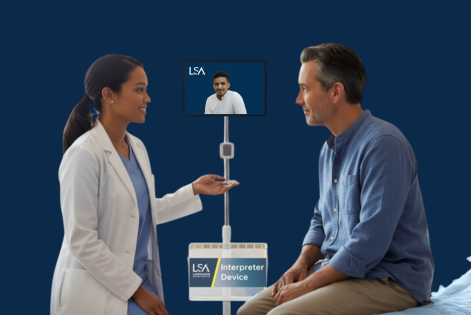
LSA accommodates interpreter gender preferences through a variety of modalities and by leveraging our expert network of interpreters and workflow-compatible technology. With services available in more than 300 languages, including American Sign Language (ASL), LSA’s carefully vetted network of 7000+ professional interpreters allows healthcare providers to meet gender requests without question.
Operationally, interpreter gender preferences can be supported through:
- Flexible scheduling and routing tools that account for request criteria
- Over the Phone Interpretation (OPI), Video Remote Interpretation (VRI), Onsite Interpretation (OSI), and American Sign Language (ASL), allowing organizations to select the most appropriate modality.
By embedding these capabilities into existing workflows, LSA helps organizations respect patient preferences without slowing care delivery.
Building a More Patient-Centered Language Access Program
An effective healthcare language access strategy involves more than basic coverage. It accounts for human factors that impact communication, trust, and understanding. And that requires the right infrastructure, experienced staff, and a carefully vetted interpreter network.
By working with a language services provider that supports interpreter gender selection alongside flexible modalities, secure workflows, and compliance safeguards, healthcare organizations can deliver language access that truly meets patients’ needs.
At LSA, we believe that effective communication encompasses more than just words, it’s about respect, dignity, and care.
Ready to provide equitable care for your patients without hesitation?

Contact LSA to discover how interpreter gender and other choices can impact your services, and how we can support you and your LEP community.