
Written by Molly MacPherson (Translation & Localization Manager at LSA) & Shenshen Jin (Translation Assistant Manager at LSA)
Overview
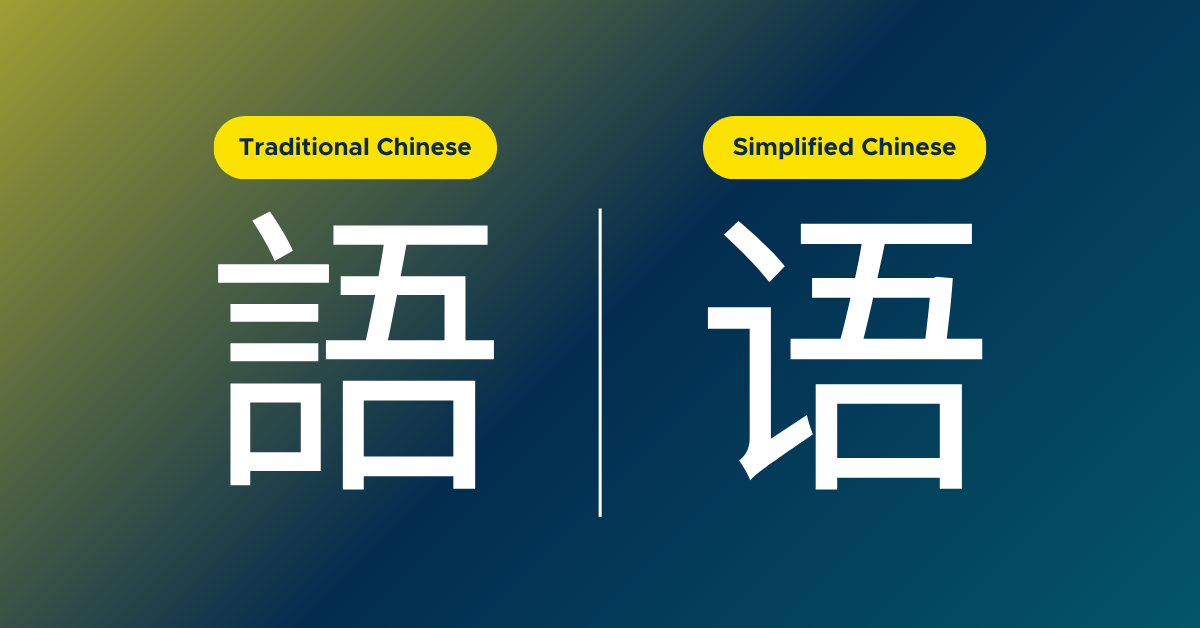
- People from China (PRC), Singapore, or Malaysia use the Simplified Chinese writing system.
- People from Taiwan, Hong Kong, or Macau use Traditional Chinese, regardless of spoken dialect.
Table of Contents
Why Language Access Requires More Than Knowing the Spoken Dialect
You have a document for a Mandarin speaker, so you need it translated into Mandarin, right? Well, not quite…
Mandarin (and Cantonese and others) are spoken dialects of Chinese. The writing system, however, is not determined based on the dialect but rather based on geography and political history.
Understanding the History Behind Chinese Writing Systems
As part of the unification of China beginning in the 3rd century BCE, one goal was to standardize the writing system so that, even if the spoken languages were not mutually intelligible, the writing system was the same. This is the reason that Chinese writing is not primarily phonetic: the characters do not generally represent sounds, or phonemes. The writing system that emerged formed the basis of modern Traditional Chinese.
In the 1950s, the government of China undertook an initiative to improve literacy in the country. With thousands of complicated characters, more than 70% of the population remained illiterate. Initially, they reworked more than 500 commonly used characters and components, simplifying them to make it easier to learn to read and write. Since then, the number of simplified characters has expanded to over 2,000 in modern Simplified Chinese. The rest of the characters, many thousands of them, have remained unchanged; thus, Traditional and Simplified Chinese have many overlapping characters, but the ones used most frequently differ between them.
Where Are Traditional Chinese and Simplified Chinese Used?
Simplified Chinese began in China, but given its significant influence in the region, it has also been adopted by other communities overseas, such as Singapore, Malaysia, and Indonesia. Taiwan, Hong Kong, and Macau, however, have resisted this change and continue to use Traditional Chinese.
Chinese Translation Guide: Dialects and Writing Systems by Region
For a quick reference, here is a breakdown of primary dialects and writing systems in different regions:
| Geographic Location | Spoken Dialect of Chinese | Chinese Writing System |
|---|---|---|
| Mainland China | Mandarin (official) | Simplified Chinese |
| Guangdong Province, PRC | Cantonese | Simplified Chinese |
| Hong Kong | Cantonese | Traditional Chinese |
| Macau | Cantonese, Macanese | Traditional Chinese |
| Taiwan | Mandarin (de facto) | Traditional Chinese |
| Singapore/Malaysia/Indonesia | Mandarin | Simplified Chinese |
| North America | It depends! | It depends! |
Writing System Selection Tip: Geography, not Dialect
The bottom line is that knowing the dialect of Chinese a person speaks is not enough for knowing the writing system into which they will need their documents translated. The key is knowing their geographic origin!
Additional Resources on Traditional and Simplified Chinese
Professional Chinese Translation Services for Language Access
LSA helps organizations identify the right language solution for their audience and deliver accurate, high-quality translations that support meaningful communication.
From healthcare and government to education and business, our translation experts help organizations improve language access and connect with multilingual communities with confidence.
