
Language Services Associates’ Alert On Coronavirus

6 min read

Ensuring Language Services During the Coronavirus Outbreak

The recent outbreak of coronavirus has health experts and many businesses on high alert. Due to the rapidly evolving situation and novelty of “COVID-19,” the potential and methods for transmission remain unclear.

The health, safety, and welfare of our friends like you and the customers you serve is of utmost concern to us. Public health concerns like this touches all industries. However, it, of course will affect healthcare most of all. Out of precaution, Language Services Associates is also monitoring the progress of the virus and collaborating with many of our clients and partners to address this major health challenge. We will continue to be an active partner with you in your preparation efforts and in the event of a pandemic.

The Time is Now for Business Continuity Planning

Many customers are also asking about contingency planning should they need to move to a heightened quarantine model or if government authorities order less access to facilities. To be prepared, we are recommending all clients to plan now for enhanced migration to a video platform in the event personnel access to your facilities becomes more restrictive.

To help you mitigate further risk, and plan, we are encouraging all organizations who need language services to adopt our video remote interpretation services in lieu of in-person engagements. If you haven’t already done so, we can help you put a plan in place to:

  • move your face-to-face interpreters over to video remote interpreting (VRI) using our IRIS app
  • quickly scale interpreting by telephone through INTERPRETALK
  • deliver American Sign language interpretation by video
  • obtain back up services to your existing language service providers in the event they are unable to deliver given the demand or due to interpreters being exposed to the virus because they are in a call center environment
  • deploy our newest option to integrate video remote interpreting-on-demand directly into your existing telehealth platform and workflows
  • enhance online conferencing (Go-To-Meeting, Zoom, Microsoft Teams and others) with interpreters by API or phone

 Our Dispersed Network of Interpreters Helps Avoid Risks

Language Services Associates provides access to a highly qualified global roster workforce of remotely distributed interpreters in over 235+ languages.  Access to highly secure, remote interpretation services helps your organization continue to meet compliance guidelines as well as minimize the risk of virus exposure and the rapid spread of infectious disease. Unlike a large call center that can be compromised by an outbreak, our network provides access to distributed points of service and ensures the chance of uninterrupted service.

We are also experienced in disaster efforts and rapidly deployed interpretation services for government entities during several national crises over the years, most recently hurricane Maria in Puerto Rico.

Because the best time to prepare is now, please contact us at [email protected] to get more information on how your organization can be prepared.

We encourage you to continue to stay informed by following updates and advisories from the Centers for Disease Control and Prevention and the World Health Organization.

Simplifying Access to Interpreters with Telehealth

4 min read

ViTel Net & LSA Partner to Improve the Clinician-Patient Experience at Hospitals

FOR IMMEDIATE RELEASE:

Media Contact:

[email protected]

800.305.9673 X55139

McLean, VA – January 29, 2020 ­-

ViTel Net and Language Services Associates (LSA) are excited to announce a new platform integration that enables clinicians to immediately add an interpreter to a telehealth video encounter within the existing clinical workflow, regardless of physician or patient location – with just three clicks.

ViTel Net’s comprehensive and flexible telehealth platform enables health systems to securely deliver care at a distance to patients in any setting, using the health systems’ own workflows. Now, through an innovative partnership with Language Services Associates, those same workflows are vastly improved, when treating limited English proficient (LEP) and hearing-impaired patients.

This industry-first solution simplifies the clinician’s experience in accessing language interpretation services to clicking the video button and selecting a language. The LSA interpreter is immediately added to the video consult – it’s that simple. The interpreter and patient videos stream on the monitor, alongside the patient’s records, medical images, and clinician documentation. No more fumbling with iPads or phones to get everyone to see or hear one another.

The NIH reports an increasing LEP population, and removing the communication barrier with this patient segment results in:

  • Greater understanding of diagnosis, treatment, and medication instructions
  • Enhanced compliance with treatment and follow-up recommendations
  • Significantly decreased likelihood of a serious medical event and reduced medical costs
  • Greater patient satisfaction

“Connecting clinicians to interpreters is now fast and intuitive, thanks to our partnership with LSA and their advanced skills-based routing platform” stated Mark Noble, ViTel Net SVP.

“This innovative joint telehealth venture fills gaps in healthcare delivery, improves the clinician’s workflow, and supports healthcare compliance, while transforming the patient/clinician experience,” says Dennis Angeline, President and COO of LSA.

About ViTel Net

ViTel Net is a leading telehealth innovator, providing a configurable and interoperable enterprise platform and point-of-care modules for the entire telehealth continuum of care. Clinicians use our technology to access medical images, patient data and live video conferencing to remotely diagnose, treat, and manage patients.  www.vitelnet.com

About LSA

Language Services Associates is a full-service national leader delivering interpretation and translation solutions. Thousands of clients worldwide rely on our unique combination of state-of-the art technology, a global roster of highly qualified interpreters providing more than 240 languages, and over 25 years of industry expertise. www.lsaweb.com

Call Center Week 2017 Summary

8 min read

At the 18th Call Center Week Conference and Expo in Las Vegas, LSA was not only a sponsor and exhibitor, but was also an active participant in the many lectures, panels, round-tables, Q&A sessions, and networking events. Over 2,000 attendees gathered to discuss and learn about the latest trends and technology in delivering excellent customer service.  We heard keynote speakers from global leaders, including NBA Champion Golden State Warriors owner Peter Guber, Jeff James from Disney, Tom Weiland from Amazon, Davy Roach from Frontier Communications, and Tim Spencer from Safelite Group.

A major announcement that reflects the changing dynamic in how call centers interact with customers is that this was the last time the event will be referred to as Call Center Week! Beginning next year, the conference will be rebranded as Contact Center Week to reflect the multi-channel expectations of customers. Customers expect to interact with companies instantly, on a variety of platforms, be it voice, e-mail, chat, text, or social media. Agents need to be able to respond with an omni-channel approach, across all of these platforms. Talkdesk, a cloud-based call center software provider, let us know that e-mail lags way behind in resolution and satisfaction of customer concerns at 43%.  Real time interactions by phone carry 59% satisfaction, and chat weighs in at 84% satisfaction!  Businesses also need to have a philosophy of a mobile-first user experience.  Consumers expect to interact on their smart phones almost exclusively, in fact, 75% of customer calls are coming from mobile phones.

Customer satisfaction has been such a driving factor over the years that it has been shortened simply to “C-Sat,” which is still the dominant consideration at Call Center Week. And it is just as important as ever. According to a study by Purdue University, 68% of customers leave a company based on a poor Customer Experience. Gartner also predicts that in just a few years, by 2020, that “customer experience will overtake price and product as the key brand differentiator.” Microsoft informs us that 97% of consumers list customer service as important to their brand choice and loyalty.

One of the biggest questions being considered was how artificial intelligence will affect customer experience. It is not a question of if A.I. will be integrated, but rather to what extent. A.I. will not completely replace the contact center agent, as A.I. can’t replicate human empathy.  A.I. will help your agents make quicker and more informed decisions while interacting with customers. Per Servion Global Solutions, an omni-channel customer experience provider, 84% of customers are frustrated when agents do not have instant access to their data. How many times have you answered IVR prompts in order to be directed to the appropriate department, only to have a live agent ask you all or many of the same questions again?  How often have you had to explain the same issue over and over again as you are transferred to multiple departments?  A.I. integration will give agents instant access to your customer profile, and will assist them in resolving your issue quickly and completely.  Again, from Talkdesk, “A.I. will help call center managers better route calls as well as provide agents with data and tools to create more positive interactions with customers. The result is a more productive and efficient call center, and a greater level of customer satisfaction, which is a win-win for all parties involved.” While A.I. can’t replace human interaction, Gartner cautions us with a prediction that by 2020, customers will be able to manage 85% of their interactions with an enterprise without human involvement.

Another recurring topic was innovation and disruption to traditional training methods. Frontier Communications has found that peer-to-peer training has emerged as preferable training method than in the classroom. It is logistically easier to plan and manage, makes actual customer interactions the basis for effective training, and doesn’t pull too many agents from the floor at one time. It allows agents to progress at their own pace, letting those who excel to advance more quickly. Medical Transportation Management (MTM) has made a huge investment in training, with over 50 trainers in their organization, making sure that culture and consistency is driven down to all 1,400 employees.

A focus on employee care was also emphasized. Disney let us know that in a poll of CEO’s, human capital ranked ahead of customer service as their top concern.  If your employees are happy, then good customer experiences will result.  And as leaders, the extent to which you genuinely care for your employees is the extent to which they will care for your customers, and each other. Echoing this, Safelite has found that customers will never love your company until your employees love it first. Let us not forget that employee satisfactions will drive customer satisfaction.

LSA Attends Pennsylvania Immigration and Citizenship Coalition Event

3 min read

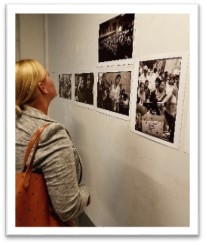
image001The Pennsylvania Immigration and Citizenship Coalition (PICC) represents the needs of immigrants, migrants, refugees and other new Americans living in Pennsylvania to policy makers, public officials, and the general public. The organization helps to educate the public and develop support for fair policies that welcome and sustain immigrants. Michele Berrios, Vendor Procurement Manager and Dominika Weston, Senior Sourcing Specialist, attended the event, on Wednesday, October 19th, held at the Asian Arts Initiative, at 1219 Vine Street in Philadelphia. PICC highlighted the work of local leaders across Pennsylvania who encourage participation of immigrant and refugee communities in civic life through language access, voter engagement, and community education. The event featured a photographic exhibition of immigrant experiences by Philadelphia-based photographer, Harvey Finkle*. A delicious multi-cultural buffet by immigrant entrepreneurs Cristina Martinez, owner of South Philly Barbacoa, and Ange Branca, owner of Saté Kampar, was topic of conversation. The Mexican and Malaysian eateries are located in South Philadelphia.

Honorable Pedro A. Cortés, Secretary of the Commonwealth of Pennsylvania, was the keynote speaker.  Nina Ahmad, Ph.D., Philadelphia Deputy Mayor for Public Engagement,was the evening’s honoree. PICC presented a Community Leader Award to Lorena Alvarez from the Centro de Apoyo Comunitario in Upper Darby and a Youth Leader Award to Erick Perez from the Juntos organization.

Representatives from CHOP, Einstein Center, Jefferson Hospital, The Greater Philadelphia Hispanic Chamber of Commerce, Catholic Social Services Archdiocese of Philadelphia, Community Legal Services, Health Federation of Philadelphia, Occupational Safety and Health, joined in the festivities, many of whom are long-time customers of LSA.

Stay tuned for future events hosted by The Pennsylvania Immigration and Citizenship Coalition as LSA will continue supporting their mission to help others.

*Harvey Finkle Photography: “Images of Peace and Justice” — An Interview with Harvey Finkle.

Interpretation Ethics: Why You Need a Professional Language Services Provider

4 min read

When a Limited English Proficient (LEP) person comes to your emergency room, law office, or parent-teacher conference, it’s important to have a professional language services provider on hand to interpret, even if a bilingual child or family member is also in attendance. Interpretation requires a select set of skills that not every speaker can master and an industry-specific vocabulary a child or layman likely does not possess.

How do you navigate situations like this with your LEP clientele? We’ve compiled a few handy reminders of why professional interpreters should be used in each critical encounter!

1. Family members can be biased.

Ready to explain a complex medical procedure your LEP patient needs? A family member may not be up for the challenge and may, “sugar-coat” your words to have an easier conversation or inadvertently miss the facts. Professional interpreters are free of bias and will treat your LEP patient with the same respect and directness as you do.

2. Friends or family may not be familiar with the necessary vocabulary.

A professional interpreter will find the most appropriate word or phrase to accurately interpret what you ask or describe. Legal jargon? Medical vocabulary? These are not, “child’s play”.  A qualified interpreter will not struggle or use an inappropriate word in its place.

3. “Bilingual” does not equal “qualified to interpret”.

Interpretation is a highly specialized occupation, requiring the interpreter to listen in one language, determine the best interpretation, and then speak in another language. To go back and forth in this way requires patience and training, qualifications your average bilingual speaker likely isn’t ready to take on for any length of time.

4. Government mandates may dictate a qualified interpreter be used.

Bilingual speakers may not legally meet the requirements of the communication at hand.  We can explain in detail how Section 1557 of the Affordable Care Act, Title VI of the Civil Rights Act of 1964, Executive Order 131664, or the Joint Commission’s requirements set the scene for exactly how your communication is to take place with an LEP speaker.

5. Risks outweigh the reward.

Many affordable interpretation solutions exist to ensure LEP communication is accurate, clear, and unbiased. You shouldn’t have to risk a lawsuit down the line because an LEP’s child misinterpreted the dosage of medication or due date of an important document.

Are You Prepared? Migration & Language Trends

4 min read

image via

A country of immigrants, language trends in the U.S. are constantly shifting: Currently 60.6 million people in the U.S. speak a language other than English at home and 65 percent of companies face language barriers that contribute to inefficiency, ineffective collaboration, and low productivity.

Today’s U.S. immigrants come from countries like Mexico, India, China, the Philippines, Vietnam, El Salvador, Cuba, Korea, the Dominican Republic, and Guatemala (the top ten represented in order of most to least immigrants). Shifts are evident even in a comparison to 1980 census data–25.9 million more Spanish speakers exist and Vietnamese speakers increased by 599 percent. Russian, Persian, and Armenian speakers more than doubled.

Come 2020, projections suggest the 60.6 million people in the U.S. speaking a language other than English could jump to 68.1 million. Spanish is expected to continue to represent a majority of LEP’s language use, totaling more than 60 percent by 2020, so having bilingual staff on hand will continue to be of value. While the number of speakers of some languages may slowly decrease (French, Italian, German, Polish, and Korean), we can expect others to increase (Portuguese, Russian, Hindi, Chinese, Vietnamese, Tagalog, and Arabic).

Curious about migration trends by state? Via Migration Policy Institute, the top five states taking in immigrants are California (10.3 million), New York and Texas (4.4 million each), Florida (3.8 million), and New Jersey (1.9 million). Look at the number of immigrants in reference to the state’s overall population and Nevada becomes a contender.

Language trends are also evidenced by the largest percentage of growth in immigrants by state – Between 2000 and 2014, the five states with the largest percent growth of the immigrant population were Tennessee and Kentucky (102 percent each), Wyoming (101 percent), North Dakota (99 percent), and South Carolina (97 percent).

Source: http://www.migrationpolicy.org/programs/data-hub

Are you up to speed on the latest regulations and standards of practice that could impact your compliance efforts?

How Section 1557 of the Affordable Care Act Affects You

2 min read

What is “The Final Rule”, Section 1557 of the Affordable Care Act?

“The Final Rule”, Section 1557 of the Affordable Care Act finally codifies and gives guidance on the requirements for language assistance services for people with limited English proficiency (LEP).

Will Section 1557 of the Affordable Care Act affect me?

It is estimated that the rule will apply to the majority of 908,000 practicing physicians in the U.S, over 400,000 laboratories, close to 200 health plans and over 130,000 hospitals, nursing homes, home health agencies and other facilities participating in Medicare and Medicaid.

What if I don’t comply with Section 1557 of the Affordable Care Act?

The failure to take reasonable steps to provide meaningful access to health programs and activities (because of the lack of language assistance services) to the 25 million LEP individuals in the U.S. is a form of discrimination based on national origin.  Non-compliance can include suspension or termination of federal funding, and individuals can sue in federal court and can receive damages.

Bad Customer Service Loses US Companies Billions

3 min read

We all love computers, well, most of us, but we know computers will never replace a human.  Humans will always value human interaction.  Customer service now defines brands and their value, and greatly affects buyer decision-making, even more so than cost. Bad customer service costs US companies $41 billion a year (Source).

  • By 2020, customer experience will overtake price and product as the key brand differentiator.
  • After a positive customer experience, 69% of Americans would recommend that company to others
  • 60% of consumers favor a balance of price and service and will not accept low service levels in exchange for a cheap deal.
  • A 1% improvement in first Call Response = $276,000 in annual operational savings for the average call center
  • Companies focused on providing a superior experience across customer journeys realized a 10-15% increase in revenue and a 20% increase in customer satisfaction. – Source

Customer service on a one-to-one basis is being reduced.  With the rise of social media, customers are now supported by organizations via public conversations on Twitter and Facebook.  Social media must be a tool in your customer service toolkit.

  • Customers who encounter positive social customer care experiences are nearly 3 times more likely to recommend a brand.
  • Additionally, 42% of people will tell their friends about a good customer experience on social, while 53% will talk about a bad one.
  • And major brands aren’t just adopting social customer service: they’re making it a major priority. – Source

One Million Americans to Learn Mandarin

2 min read

Image via

Are you one of the 200,000 American students studying Mandarin Chinese? Compare that to estimates of 300 to 400 million Chinese students studying English. President Barack Obama announced an initiative in September to increase that number to one million by 2020.

“If our countries are going to do more together around the world, then speaking each other’s language, truly understanding each other, is a good place to start,” Obama said at the joint press conference with Chinese President Xi Jinping.

President Obama’s program will be administered by the nonprofit 100,000 Strong Foundation and promises to build a new generation of international leaders who will engage with China effectively.

Travis Tanner, senior vice-president and chief operating officer at the 100,000 Strong Foundation, says the initiative will “ensure our trade relationship with China continues to benefit the American economy, and that the future generation of American entrepreneurs, business owners, journalists, engineers, scientists, doctors, as well as government officials at both the national and state levels, understand China.”

Best of luck to all new Mandarin students in the coming years!

Interested in learning more about how LSA can help with your interpretation or translation needs? Contact us today!

Watsi Update – Meet Daniel

2 min read

Language Services Associates (LSA) is always seeking opportunities to help people. Recently our monthly donation to Watsi’s Universal Fund helped Daniel–an 8-year-old boy from Ethiopia–to receive a needed surgery for Hirschsprung’s disease, which affects the colon.

Daniel lives with his younger brother and his mother, whose single-parent income has not been enough to pay for long-term solutions to Daniel’s health. Several years ago, Daniel underwent a colostomy to treat an obstruction, African Mission Healthcare Foundation (AMHF) reports. Daniel needs an additional surgery to fully treat his disease, one which Watsi donors including LSA have made possible.

“Despite everything, Daniel is a very happy boy and he has a very positive outlook on life,” AMHF said. “He is dreaming that if he gets well from this condition, he can go to school and become a big government officer.”

Interested in helping patients like Daniel? Learn more about becoming a member of Watsi’s Universal Fund at Watsi.org and meet other patients that need your help!

“We believe everyone deserves healthcare, and we’re making that a reality, one patient at a time.”

– Chase Adam, Founder of Watsi

Trick or Treat? Foreign Language Horror Films Taunt with Terrors

3 min read

Images via IMDB.com

Language may not be universal, but screams are! In preparation for Halloween, LSA has compiled some of the most popular foreign language horror films for your next gruesome movie night. Share your favorite fright below!

  1. Thirst (“Bakjwi”) – 2009, Korea – Winner of the Jury Prize at Cannes in 2009, the film is a vampire romance that tells the story of a priest who volunteers for a medical experiment to save his constituents.
  2. Let the Right One In (“Låt Den Rätte Komma In”) – 2008, Sweden – Based on the novel by John Ajvide Lindqvist, bullied boy Oskar is befriended by Eli, who is more than she seems.
  3. The Orphanage (“El Orfanato”) – 2007, Spain – Spain’s highest-grossing film in 2007, this is a classic ghost story set in the orphanage a woman returns to with her family.
  4. The Host (“Gwoemul”) – 2007, South Korea – The highest-grossing film in South Korean history, the tale is a family drama mixed with gore as a monster created by chemical dumping kidnaps a girl.
  5. Audition (“Ôdishon”) – 1999, Japan – A widower allows a string of women to ‘audition’ for his hand, and the one who strikes his fancy has a gruesome fetish.
  6. Cronos – 1993, Spain – Director Guillermo Del Toro’s introduction to the world, Cronos follows an antiques dealer who is pierced by one of his pieces and takes on some sinister traits.

Need some more thrills? You have a scary slew of Spanish choices here. Want to narrow your choices to the 21st century? Invest your time with these top ten terrors.

To learn more about how LSA can help you communicate with your Limited English Proficient (LEP) clients, contact LSA today!

Watsi Update – Meet Restetuta

3 min read

Whether it’s through language or medical support, Language Services Associates (LSA) loves to help people across the world. Our recent donation to Watsi’s Universal Fund means that Restetuta–a 54-year old woman from Uganda–will receive treatment for an inguinal hernia that has plagued her for years. Learn more about Restetuta’s story below.

A mother of 10 children, Restetuta is always putting others first, even when it comes to her health. Restetuta has been suffering with her hernia for four years now, managing pain with medication but putting off costly surgery. Thankfully, Restetuta was referred to Watsi’s medical partner, African Mission Healthcare Foundation (AMHF), to cover the cost of surgical repair.

If Restetuta continued to avoid surgery, AMHF reports she could face life threatening complications. “The hernia can get obstructed or strangulated causing intestinal perforation,” AMHF said.

After surgery, Restetuta will be able to return to her family in full health, weaving baskets and tending their garden. She and her husband are overjoyed.

Interested in helping patients like Restetuta? Check out more about becoming a member of Watsi’s Universal Fund at Watsi.org and meet other patients that need your help!

“We believe everyone deserves healthcare, and we’re making that a reality, one patient at a time.”

– Chase Adam, Founder of Watsi